Home About Me My Store Freebies Pinterest Facebook Instagram TeachersPayTeachers Email Twitter Image Map

Long Division Strategies


long division strategies

Long division can be such an exhausting unit. We oftentimes use colors and single-step instruction to break down this important skill. Yet, students continue to struggle with remembering all steps. I've had countless students remember the first step and become at a loss for how to move forward. Listed below are three proven methods to help all students divide successfully.

MNEMONIC DEVICES


To help student proceed past the first division I have used mnemonic devices. These little phrases will help students get past that first step hurdle.
A basic device will include the needed "Divide, Multiply, Subtract, Bring Down". The "Rs" represent "remainder" or "repeat". The "C" is for "Check".

To remember the steps for long division, there are countless choices:

For Your Foodies
  • Dirty Monkeys Steal Cheese Burgers
  • Does McDonald's Sell Cheese Burgers Raw?

For Your Horror Fans
  • Dracula Must Suck Blood
  • Dead Monkeys Smell Bad

For Everyone Else
  • Dad Mom Sister Brother Rover

Depending on which steps you want to highlight in your mnemonic, you can choose one above or create your own!

Research shows that mnemonic devices help us remember important facts and principles. They can help with large pieces of information by organizing steps, parts, phrases, and the like.

Through repetitive guided practice, I reinforce the DMSCB until they remember the steps to complete a long division problem independently. Through the different practice problems, I provide opportunities for them to see how different outcomes can test their confidences. But as I have experienced myself, only practice will help students master this process.

But there are always those students who struggle with multi-step anything. Sometimes different safety nets must be put in place or new tools added to their toolboxes. Again as all good teachers do - we turn to others for suggestions!

long division strategies


BOX METHOD


I went searching for another way to reach those students who couldn’t remember past the Divide, Multiply, and Subtract steps. The box method became my new favorite way to teach long division!  

The box method is another way to get the job done with less thinking about which different step is coming next. This method uses a box that organizes the place values of the dividend. The divisor divides into each place one at a time. Instead of checking and bringing down, the difference from the subtracting step gets brought up into the next place value digit. Then the student divides, multiplies, and subtracts again.

This method takes a few steps out of the equation and allows long division to become less complicated. In my experience, this method allows most of the struggling students to be successful with long division.

long division strategies


PARTIAL QUOTIENT


Another way to teach long division is through partial quotient division. This method uses simple logic by allowing students to see the problem in a less abstract form. Partial quotient is also helpful for the students who haven’t mastered their facts.

When the student divides into the dividend they can use easy multiples of the divisor. The student is able to break up the problem into manageable parts so that it can be easier to divide. The student then records the partial quotient in a “work” column to the right of the problem. The problem is complete when the student can add no more to the work column because the remainder is less than the divisor. Lastly the partial quotients are added to find the quotient.

long division strategies


A teacher could search for hours trying to find new ways for every student to master a concept. But when it comes to long division - DMSCB and the box method are my top picks!

Need some ideas for MULTIPLICATION?
Click the link below to read about three successful strategies for teaching Double-digit Multiplication:
double-digit multiplication strategies

long division strategies


Double-digit Multiplication Strategies


double-digit multiplication strategies

Have you ever wondered if your students will master double-digit multiplication? There are so many techniques, but which will be the best one for your learners? A few years back, I was struggling with these questions.

When we were in school, we were taught the standard algorithm. I can still remember standing nervously by the chalkboard completing long problems in front of my class. I was never really sure what I was supposed to do next. There were no tricks or shortcuts - just the basics of multiplication. And if the standard algorithm didn't work for you...well, you were up a creek. Thankfully, today, we have more than one way to teach multiplication.

3 "Out of the Box" Methods for Teaching Double-digit Multiplication


1. TURTLEHEAD 

We know not every student learns quite the same way. So I ventured onto the web and wandered down the YouTube rabbit hole. However, it wasn’t a complete waste of time. I found one video that stood out from the rest in explaining double-digit multiplication -- the turtlehead method!


This video is very primary, but the kids will connect to the silly graphics and music. This method demonstrates all the important steps that kids usually forget to do in the standard algorithm. The turtle helps them remember where to start multiplying, to cross off the multiplier, and to put in that magic zero! After just one exposure to the video more students were suddenly becoming accurate as they follow the turtle’s cues. To help students remember the steps and give them a visual on the wall, you can create a poster.


double-digit multiplication


2. LATTICE

For some kids, the steps of the standard algorithm or the turtlehead method are just too much for them.

A decade or so ago the trend in math was lattice multiplication. This technique can help you reach those students who struggle with algorithms that use a standard set-up.

Lattice multiplication creates a grid with double-digit numbers placed on the outside. There are diagonal lines that run through the grid to divide the grid boxes into halves. As each number is multiplied, the values are placed inside the grid. Once all the multiplying is done, the numbers are then added down from the right to left, moving downward.

When using this method, the student doesn’t have to remember about the magic zero. Most mix-ups may happen when students aren’t sure about where to multiply first. In the past, I have shown them how to draw a dot on the top right corner of the box. This will be their starting point for the lattice.

Please note: some standardized testing does not recognize lattice as a legitimate algorithm (or award points for correct answers) because it is not based on place value concepts; it is simply a "cool trick". 


double-digit multiplication

3. AREA MODEL

One last way to reach students is multiplying using the area model. This organized method uses the concept of area: length x width. The numbers are broken down using expanded notation. Once the numbers are multiplied, the answers go inside the grid created in the area model. All of those answers are then added together to get the final answer.


double-digit multiplication

From experience, I have learned to start with just one technique. As I saw some students struggling, I would introduce a new method to them. Some students were most comfortable with the standard algorithm because that is the technique they were taught by their parents- and that's great! But I would encourage them to at least give these others a try. I would even challenge them to solve using the method most comfortable and them check their answers using a different method.  

At the end of the day the most important thing was a student's ability to correctly solve the problem. And using one method or the next, soon enough, all my students were multiplying with ease!

Need some ideas for LONG DIVISION?
Click below to read about three strategies for success!

double-digit multiplication

Valentine Compliments Poster (Editable FREEBIE!)


Each February students exchange store-bought or even homemade valentines. This annual exchange can sometimes create angst and dread among your students. However, this year you could be the teacher that creates an experience that provides the warm and fuzzies as well as a keepsake. I am not saying ditch the cute cards, but this poster will make a bigger impact for sure! Do I have your attention yet?


Compliment posters will be something that your kids will be able to read over and over again, especially on those days that they might need a little extra boost. This is also a great tool to reinforce character education or the Positivity Project in your classroom.

You can find an editable freebie for this activity in my TeachersPayTeachers store here --> Valentine's Day Activity: Compliments Poster


The first thing you have to do is create a list with the name of each of your students on it. Each line should provide enough room for the name and a sentence to be written. Once your name list is complete, make a copy for each student and any teacher/adult who works in your room.

As I pass out the name list, I instruct the students to put an X by their name to ensure they don’t write one about themselves. After that we have a discussion about inside (character) traits and outside (physical) traits and which ones should be used for this task. For example, I might tell them that telling someone their shirt is nice, but doesn’t really tell them about the kind of person they are. Although the ultimate goal would be for each student to write a compliment regarding a character trait, I do allow for students to compliment a physical trait as long as it's appropriate and the student writing can't think of anything else. Giving evidence to support their compliments is also encouraged. I also post our character education traits and the Positivity Project principles for them to use as a resource.

After they have finished their compliments, I make sure I look over each of them. I make the students clean up their writing or make the compliments more complete. Once everyone is corrected and ready to go, the cutting begins. Soon each student will have a compliment strip for each kid and each adult in the room.


The posters will then be placed on the tables/desks around the room so each person can see where to place the compliments.The students voraciously pass out the paper strips to each poster; it's similar to the Valentine card exchange that happens at this time of the year. Everyone is eager to read what other people are complimenting. They take an interest in their posters and their classmates' posters as well.


As soon as the last compliment is passed out, the gluing begins. The strips are glued in a row under the name. Each student will soon have a poster full of compliments about themselves. Students are invited to either keep the poster at school or take it home; it's up to them. These posters will serve as confidence boosters and a keepsake for not only the current school year but for years to come.

Upper Elementary Sight Words Intervention

upper elementary sight words

The gap between fluent readers and non-fluent readers becomes ever-increasing as students move up grade levels. By time they land in my classroom students (ideally) have transitioned from "learning to read" to "reading to learn". But what happens when they get to my door and they haven't learned to read yet? 

I have been teaching fourth grade for over 15 years. I have a master's degree in reading. I am still learning to navigate the choppy, deep, uncharted waters of reading. With the brain needing to synchronize so many pathways and systems in order to reach the levels a "fluent" reader obtains, I have found this intervention hones in on specific student needs and helps upper elementary students close the gap---> Sight Word Decks.

It sounds simple. It is. This technique can be long and tedious. It requires a commitment to stay the course. However, it is easy. It is student-specific. And, the end results will amaze you.


STEP ONE: GET A LIST OF WORDS

My packet uses a blended list of the most common sight words and high-frequency words. It is a Kindergarten through Fifth Grade list. It's lengthy and segmented by grade level until third grade. The third through fifth grade list in one big, long list.


STEP TWO: CHECK YOUR DATA

Using DIBELS, or whichever fluency check your district uses, check out which students did not meet benchmark. I zero in on the lowest. The students whose low scores are due in part to lack of sight word knowledge. I target them. Typically, students who are just below benchmark can make up the gap through other strategies or interventions (sustained silent reading, phonics, phonemic awareness drills, etc...) Sight Word Decks are for the lowest of lows. As such, I don't have too many decks running at the same time. 


STEP THREE: START TESTING YOUR STUDENTS

I sit with each student individually, one at a time. I have two lists ready to go. One test packet for the student. One master list (per student) for me to take notes. You will take notes on each student on "their" list. When you start to test a new student, you will get a fresh packet and take notes specific for that student. I write the student's name on the top of each master list.

I hand the student test packet to the student and ask them to start at the kindergarten list and read each word. If they read it automatically, I leave it blank. If they read it incorrectly, take too long, or need to stretch the word, I place a check mark next to the word on my list. 

I have the students read until I have enough words to start a sight word deck. For some students, they will stop during the first grade list, for others, it will be further into the packet. The goal is to get enough words without exhausting the student. Generally, I like to have about 30 cards in a deck. It is very common for me to test students in more than one session. The goal is to ensure that errors are due to a lack of word attack skills and not just exhaustion or boredom.

When I am working in the master list, I will sometimes note what the student incorrectly read. That notation also helps me understand where the gaps are. 


upper elementray sight words
First Column: Initial Test
Second Column: Subsequent Testing
(Note Percentage Increase at the Bottom)

STEP FOUR: WRITE THE WORDS ON INDEX CARDS

Once you have enough words, its is time to transfer the words the student read incorrectly onto index cards. To stay organized, each student is assigned a different color. The color-coding helps me easily identify which decks belong to which student. The master word list packet I use to generate the sight words also has the student's name written in the same color.
upper elementray sight words

STEP FIVE: RUN THE CARDS

Run the cards every day. Sit with the student and have them read each card. If the student correctly reads the word place a star (or whatever symbol) on the back of the card. If they don't, just flip the card and move onto the next one. When they have earned ten stars, the card is removed from the stack and placed on a ring.


upper elementray sight words
As the student learns more words, and the ring cards increase, you will need to go back to the master list and test for more words. You will be replacing the words that have been removed with new words the student needs to learn. Students love to watch their ringed deck grow. There is no mistaking the look of pride on their face when they add cards to the ring.
upper elementray sight words

STEP SIX: CHECK YOUR DATA

Periodically check your student's growth. Go back to the master sight word list. Ask them to read the words they missed. Indicate on the list if they have correctly read the word (using a star or other symbol) or not (another check). I will take the master list data and plug it into an excel sheet to see the growth over time. It helps to share the data with the student and their family. This data is especially helpful at report card conferences or during IEP meetings.


ADDITIONAL THOUGHTS

This is not a five-minute fix. It is easy to implement but takes time and commitment to see the growth. 

It is easy enough that it can be done with parent volunteers, TAs, or college students.
It is quick enough that I sometimes "run cards" during bus dismissal.

You will be amazed at what you learn about your students as readers. When I am running cards with the students I will oftentimes pick up on the strategies they use and what they are lacking. Their word attack skills become quite evident. You will begin to see patterns and be able to better target their gaps. 

Some of the things I've noticed and still look out for:
- understanding of vowels (short, long, and teams)
- "magic e"
- dropping of endings
- using the onset only
- prefix and suffix
- digraphs
- blends


Click below to get the lists and recording forms for free!

Upper Elementary Sight Words Intervention System


Like anything worthwhile, time and commitment are required. Sight Word Decks are a great way for students to start closing the gap between them and their peers. Along with helping them create and restore reading pathways, this intervention helps teachers pinpoint specific student needs. One of the best parts of the intervention is the ability to see growth in a very short amount of time.


upper elementray sight words

Easy Candy Cane Christmas Ornaments

easy candy cane ornaments elementary classroom

It's that time of the year! Are you the kind of teacher that goes "all in"? The tree is up the Monday after Thanksgiving with ornaments and twinkle lights spread throughout the room. The yearly construction paper fireplace has found its annual home on your hallway bulletin board. Is that you? Well, then, you don't need this blog post.

You may be interested in this lengthier project:
Lengthier (and ready-made bulletin board) Classroom Christmas Craft

This post is for the teacher that is waiting for the Christmas miracle to happen. The one where the blank bulletin board that has sun-faded spots from Halloween pumpkins will magically decorate itself. Or perhaps some elves will show some mercy and get the glitter and cotton balls to beautifully accent the classroom projects while simultaneously avoiding the mess that comes along with such cute adornments.

I offer an EASY CHRISTMAS ORNAMENT! Seriously, it's so easy. This ornament can be done with minimal supplies and time. Win-Win!

You will need:
- cardstock (maybe- you could use construction paper)
- tissue paper cut into squares (perhaps cut, perhaps not)
- liquid glue (absolutely- you need liquid glue)

Time:
- less than 30 minutes to make
- an hour or two to dry

To begin, students will have a cut out of a candy cane (you could change up and use a different shape). The candy cane shape works well because you will not need a hook later on to hang it on your classroom tree. I pre-cut the shapes to save time. You could work on some fine motor skills by having the students trace and cut their own candy cane.

I make the shape using cardstock for durability. However, you could get away with construction paper.

Then, students scrunch up the pieces of tissue paper, dip them in glue, and attach them to their candy cane. Viola! Done! I cut the tissue paper into squares, but you could have students tear pieces to add a bit more texture to the ornament. 

The students will come up with their own create ways to decorate. Some will stick with traditional colors and patterns. Others will take creative liberty. 


easy candy cane ornaments elementary classroom
Work in Progress
easy candy cane ornaments elementary classroom
Partially Done Candy Cane Ornaments
Once dry (they will dry in less than a day) you can hang them on the tree. Before the Christmas break comes to an end have students wrap them for a family gift!

easy candy cane ornaments elementary classroom
Finished Ornaments
easy candy cane ornaments elementary classroom

easy candy cane ornaments elementary classroom
Class Christmas Tree
The simplicity and ease of these ornaments helps bring some Christmas spirit to your room without the angst and annoyance of days-long projects. With minimal mess and maximum "wow" you too can create ornaments that rival "that teacher" down the hall that makes Santa's elves look like slackers.

easy candy cane ornaments elementary classroom
Merry Christmas!

Giving Thanks 2018


My first love is art. In fact, I started my college career pursuing fine art. But after obtaining my 2-year degree, I switched paths and finished my bachelor's in elementary education. I love teaching, too. There is no question--- I made the right choice. However, there are days when I want to immerse myself in colors and lines, to create and experiment, to bring my love of art to my students. The struggle is where to find the time (and the resources).


That's where Art With Jenny K comes in. No matter what I want to do, she has something that will work! Her detailed, easy-to-follow instructions help guide me to guide my students and the results are nothing less than spectacular.

Here is a small sampling of what she offers:

COLLABORATION POSTERS
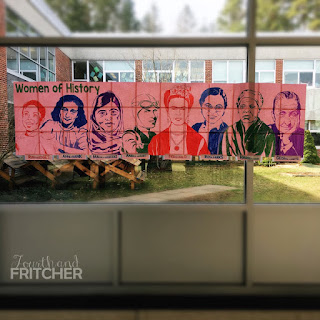
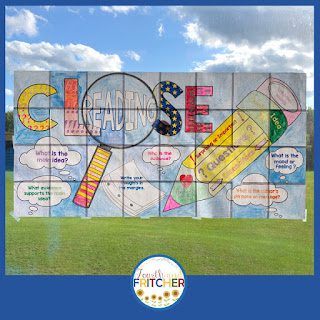
My students love these. They love contributing to something bigger than them. It is especially gratifying when they start to assemble the final product and are guessing at what it will be. When we complete collaboration posters of famous people, the discussion always turns to who the people are and why they are famous. I love it when they are stumped my someone and then race to the computer in order to Google the name.
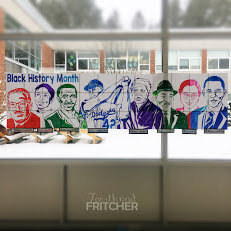
Black History Month

Women's History Month (I printed the grid on pink paper)

Close Reading (this was a great team-builder to kick off the school year)
You can find these and more here:

DIRECTED DRAWING
I love this little bunny freebie. It was a perfect project to complete just before Easter. The step-by-step instructions gave students enough support to feel accomplished yet enough creative freedom to make it their own. Every student brought his/her bunny home with a smile of pride on their face. I went a bit beyond the usual colored pencils and/or crayons and had the students mix the media. They were encouraged to use watercolor as well. The results were stunning!


This little cutie is at the following link:
Other FREEBIES are here:

BEAUTIFUL BULLETIN BOARDS
Bulletin Board. Just those two words can send a shiver down a teacher's back. I don't worry about them anymore. If I am in a pinch and need something seasonal and authentic to the students' work, Jenny K has some amazing things available! 

I will disclose that neither board below was a quick project. Both took a bit of extra time. However, that is the trade off for beautiful student work that has a better chance in a memory box rather than the garbage.

This pumpkin project was brought to my attention because I subscribe to Jenny's email list. I highly recommend you scooch over to her blog and sign up! Click the link below and fill in the fields on the top right portion of her blog.

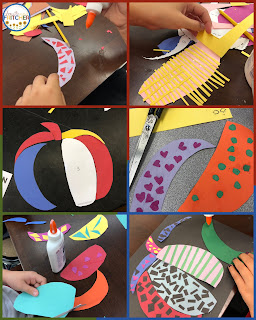
This template came through my email one morning and I decided to give a whirl. It was multi-step and required thought, precision, and grit. When completed, I used the pumpkins to create a fall bulletin board. The staff and other students loved the board and my class was constantly complemented on their efforts.
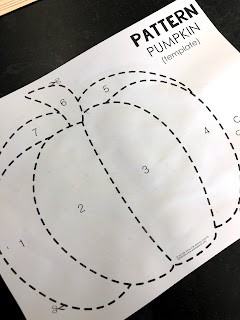
The Template
Pumpkin Creation (2-3 days, 30 min/day)


You can find the template for the pumpkin project here:

Agamographs are a struggle the first time you make them. But if you stick to it, the students will get faster and more precise each time. I love the challenge this art project offers. Students need to work fine-motor skills during the coloring. Then, they need to use precision and patience to get them folded correctly. An added bonus to this project is the ELA component. Students research the holiday and write down a few facts to share. The facts are displayed underneath each agamograph.
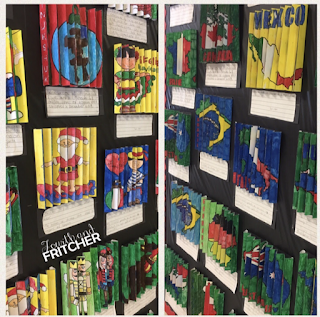
Christmas Around the World Agamographs

You can find more agamographs here:

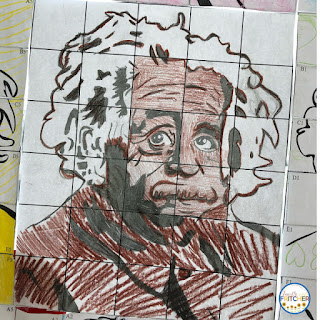
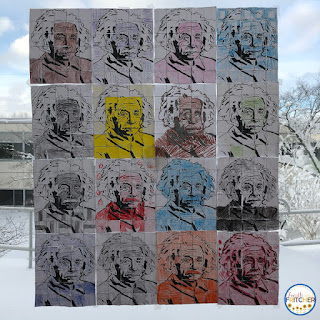
Similar to collaboration posters are Jenny's Famous FacesUnscramble Portraits. The difference is the students can work independently to complete them. They are smaller than a poster and are completed a little more quickly.

For Pi Day last year I had the students complete an Albert Einstein Unscramble. The directions included more than one option so that students of different abilities were able to successfully complete the portrait. Some students chose to use the preprinted drawing, other students chose to take on the challenge of drawing the lines themselves!
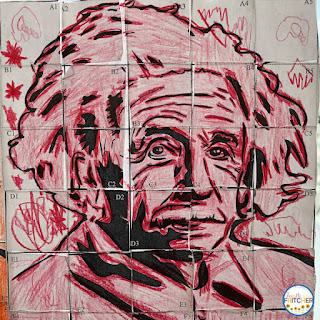
Completed using the preprinted drawing.

Completed using the grid to draw the portrait!

The collective result!
More Famous Faces Unscramble Portraits are here:

Now, aside from all these amazing art projects, she also offers art-infused lessons! No matter what you are looking for, she has it! For students who are artistically-inclined, the combination of content and art is a nice break from the constant barrage of curriculum that can sometimes happen when we are trying to get through the material. The switching back and forth between the hemispheres in their brains helps keep them charged and engaged. 

Jenny teamed up with Mary Beth from Brain Waves Instruction to create a wonderfully balanced resource that incorporates differentiated passages and artistic response.
I have used a lot of these non-fiction reading comprehension passages. It is especially helpful that they are leveled. These passages are quick print-and-go. Love, love, love them!

To see even more of what Art with Jenny K can do for you, click the link below, explore, and don't forget to click on the GREEN STAR to follow her. You won't be disappointed!

Thank you, thank you, Jenny K! My class, my bulletin boards, and I are so very grateful for the beauty and art you bring to our classroom year round.

Happy Thanksgiving!

Creating One Anchor Chart for Multiple Classes


There are pros and cons for every scenario in teaching. If you team, it has its fair share of the yeas and nays as well. For instance, I absolutely love having fewer preps. The caveat to fewer preps is that I will be teaching the same material more than once. And, I'm ok with that too. However, when creating anchor charts for multiple classes it can be a bit tricky.
Anchor charts are most effective when they are built with the students. Students have an opportunity to construct their own meaning because they are part of the process during which the chart is built. The words and information comes from them. Anchor charts give students an opportunity to see their own ideas reflected back to them. 

I love building anchor charts with my students. But, I don't want to hang multiple charts of the same information; especially when the topic is identical and the responses are similar enough that more than one chart would be redundant. So, what's a teacher to do? 

To begin construction of the chart, I present the same blank page with the heading/icons already written on the top. For example:


Then, I move the students through the construction of the chart. I have students submit ideas on sticky notes. Once they have written their ideas down, discussed, and edited notes, I collect them. Depending on the lesson, I then lead the students through the notes and how they apply to the chart. I will also put the notes into similar categories or ideas and then hand write the student responses on the chart. When I hand write the ideas I will use different colored markers to indicate which ideas came from which classes.


You can read more about how I use STICKY NOTES in my classroom here:
4 Ways to Use Sticky Notes

To read about the Acceptable/Unacceptable Anchor Chart, click below:
Refocusing for the Rest of the Year